
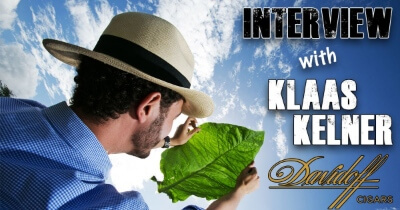
Let’s get to know Klaas. How would you recount your many roles in the tobacco business so far to those that aren’t familiar with your work?
I like to say that my first role in the tobacco industry was being a good, respectful, and attentive son. Very early on in my childhood I knew that I wanted to follow my family’s footsteps in the business. However, to accomplish that, it was and still is my duty to learn as much as I can from my father, family, and tobacco friends. My parents did a great job at including me in their environment and fostering my love for the leaf. There really is no “tobacco and cigar” university for this, you learn through osmosis and grinding it out in the farm and factory.
After college my father and the company gave me my first “official” job in the Davidoff factory, but it wasn’t your typical job. They decided that I would get paid to learn about tobacco; it was like a unique internship. I spent a year and a half rotating through all the departments in the company. And believe me, this is something that I didn’t necessarily want to do, but it gave me the foundation for what I do today.
Currently, I am on the marketing side of the company. My title is Davidoff Sr. Brand Ambassador, and I am based in the Pinellas Park offices in Florida. In a nut shell, I get to teach everything I have learned growing up in the industry. I travel, smoke cigars, and have the “occasional” drink while preaching the Davidoff philosophy. I don’t think it’s a bad gig!
What was it like growing up as a member of the Kelner family at the top of a cigar empire?
I wouldn’t call it an empire. My father started Tabadom in 1984 with 10 cigar rollers. It was a tiny factory making about 500,000 cigars a year. The first brand he made was Griffins, and shortly after Avo came along. Interestingly enough, my father never created a brand for himself. He wanted to focus all his efforts in making the best quality premium cigar. Having a brand would mean he would lose focus with marketing and sales. It was in 1990 that Davidoff chose my father to start manufacturing their cigars when they moved their production from Cuba to Dominican Republic. I was born that same year.
Growing up, it was more about spending time together as a family. We would do regular family field days to the tobacco farm and on Saturdays we would visit my dad at the factory. It was a care-free time of my life that nurtured my passion for the tobacco industry and all its people involved.
On the other hand, my father is a very hard-working man. We owe everything to him and the team he was able to form. I saw a factory of 20 employees grow to 1,500 employees, and a cigar production grow from half a million cigars to over 20 million cigars. Now, I am proud to say I am also part of that family and I hope to maintain that same type of work ethic.
Over the last several years, Davidoff has become increasingly innovative from the consumer perspective. What can you tell us about innovation behind the scenes at the fields, the factories, all that stuff that we can’t directly taste or see?
Every once in a while, somebody will adapt a process in the factory that will bring along a new product to the market. Another type of innovation that consumers can clearly see is when a company starts using a new tobacco that they were not previously using. This will bring a whole new taste profile never before offered by that company. However, in my opinion, the coolest innovations happen in the greenhouse and farms. What am I referring to with this? The Creation of new hybrids and discovery of new soils.
When it comes to creating a new hybrid, we apply Mendel’s Theory of Inheritance for our tobacco hybridization. We cross genetically different tobaccos to create never before seen flavor profiles. We can also cross seeds to increase the tobacco’s resistance to certain diseases. This allows us to plant tobacco in regions that are prone to diseases and increase yield. What is amazing about this is that it takes about eight crossings to get a seed genetically stable with the qualities you want. In a controlled environment, that is a minimum of 4 years!
The same goes for a new soil or region. You can’t just go to a new region and start planting tobacco. Analysis of the soil and weather need to be studied. Many test crops are done in the region with different seeds to find the right match. It takes several years to get a new farm running properly and producing the right quality of tobacco. Yamasá is a perfect example of this. It took us over 20 years to get the farm to where it is today and it does not stop there. Every year we continue to do research in the farm testing new seeds and hybrids. It is a never-ending search for the next best seed, the next best soil, and the next best combination of perfect flavor.
Where do you see Davidoff and Avo in the next 3-5 years as the landscape changes and your portfolio increases?
For both Davidoff and Avo, you will start to see a focus on the core lines, the classics. It is important to reinforce the already solid foundation of the brands and teach the consumers what makes Davidoff a Davidoff, and what makes Avo an Avo. In a modern age where the industry is saturated with limited editions and “what’s new” or what is “in”, I strongly believe that developing long term brand loyalty to our most iconic cigars is imperative.
For everyone that can’t attend one of your blending and tasting seminars, what are some of the highlights that you discuss?
A tasting seminar’s goal is to enhance the consumer’s knowledge and vocabulary in the art of cigar smoking. Education in any industry is key for growth. The problem is that the cigar industry doesn’t have readily available courses as other industries do. Furthermore, the typical cigar aficionado only has the opportunity to taste finished blends at the retail store level.
That is why the best seminar is the component tasting where the consumer gets the opportunity to smoke different cigars made 100% of one type of tobacco. They get to taste the different ingredients that stimulate the palate in various locations and produce distinctive aromas. At the end of the seminar they get to taste all ingredients blended together and understand what each component contributes to the overall blend.
The tasting covers all the major agricultural and processing factors that go into manufacturing a cigar and differentiates what makes Davidoff cigars unique. Most importantly, the consumer will appreciate how much work and passion goes into creating these beautiful works of art. Cigar manufacturing is science, quality control, hard work, and passion.
For every 2018 Davidoff release, I feel like there is a ton of backstory and history that we’re missing. What interesting tidbits could you share about three cigars of your choice?

I think this one was one of the more interesting projects we had this year. Davidoff worked with 5 world-renown Michelin Star Chefs to create a culinary focused cigar. What I liked most of this project was having the opportunity to meet some of these Chefs. Three of them (Thomas Keller, Alvin Leung, and Shaun Rankin) came to Dominican Republic and we had the pleasure of doing a beautiful event with them in one of our farms.
Davidoff Florida Selection 2018
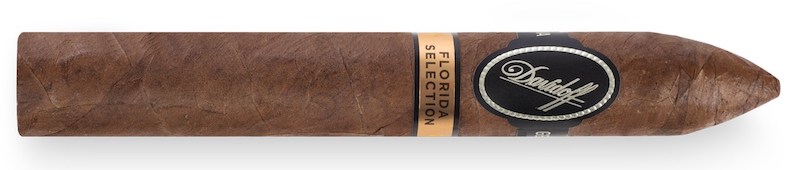
I have traveled to many countries and regions to see tobacco farms, but I never thought I was going to see tobacco in Florida. Jeff Borysiewicz made this possible. He brought back the heirloom Sumatra seed from the 1970s back to Florida. Now, in collaboration with Davidoff Cigars we are able to give consumers a new taste profile that hasn’t been seen in over 40 years.

Over the years, Davidoff has released many memorable and loved cigars. When people ask me what my all-time favorite cigar is, I have a hard time choosing. That is probably one of the hardest questions you can make to a cigar manufacturer. However, two of my cigars were relaunched in our Vault program. They are Diademas Finas 50thAnniversary and Davidoff Toro Especial Selección 702. These blends have been recreated perfectly and every time I enjoy one I am teleported to my most nostalgic cigar moments.
What are some of your favorite cigar pairings lately?
As of lately I have become a fan of pairing cigars to bourbons. Not all cigars work with bourbon because you have to match the sweetness and spiciness of the bourbons to a corresponding cigar.
These are some of my favorites that you can probably find anywhere:
- Davidoff Yamasá Robusto with Blanton’s Bourbon
- Davidoff Nicaragua Diadema with Angel’s Envy Finished Rye
- Davidoff Winston Churchill The Late Hour Toro with Woodford Double Oak
For someone that hasn’t taken the leap into the Davidoff swimming pool yet, which cigar would you recommend as intro to the brand?
That’s a very tough question. Depending what their preferred flavor profile is I would suggest different cigar lines.
You can divide the Davidoff portfolio into three main groups. The Core cigars (white bands) are the more classic Davidoffs that contain predominant Dominican tobaccos and tend to be on the softer side. The Discovery cigars (black bands) branch out to tobaccos from other terroirs like Nicaragua and Brazil and tend to be bolder in flavor. Lastly, the Winston Churchill lines have complex flavor profiles from several regions in one.
But to answer your question, I would probably introduce somebody to Davidoff with a Special <R> or Aniversario No. 3. These are the more iconic cigars that have been around since the early 1990s and have never failed me.
What’s next for Davidoff fans in the next 12-18 months?
Davidoff just launched the limited edition Year of the Pig. This annual release is one I look forward to every November. However, what all fans should really be on the lookout for are the Vault releases. Some of these very special cigars have been created for various projects around the world and they are nearly impossible to get your hands on. The Vault program allows our Davidoff fans the opportunity to enjoy something they would have never tried otherwise.


Leave your comment